



Understanding Pregnancy Tests: What We Tested and Why
Pregnancy tests detect human chorionic gonadotropin (hCG), a hormone produced by the placenta after a fertilized egg implants in the uterine wall. This hormone doubles roughly every 48-72 hours in early pregnancy, making it a reliable marker for confirming conception. Understanding how these tests work helps you choose the right option for your specific timing and accuracy needs.
Most home pregnancy tests fall into three main categories. Traditional wand tests feature an absorbent tip you hold in your urine stream for several seconds. Strip tests require dipping into a collected urine sample, making them more economical but slightly less convenient. Digital tests display clear “pregnant” or “not pregnant” results instead of requiring you to interpret lines, though they typically cost more per test.
Sensitivity Levels Matter Most
The critical specification to examine is sensitivity, measured in milli-International Units per milliliter (mIU/mL). Tests with 6-10 mIU/mL sensitivity can detect pregnancy earlier than those requiring 25 mIU/mL. Lower numbers mean higher sensitivity. The most sensitive tests can identify hCG levels 5-6 days before your expected period, while standard tests work best on or after your missed period.
Accuracy rates exceed 99% for most quality tests when used correctly, but timing significantly impacts reliability. Testing too early increases the chance of false negatives because hCG levels may not have reached detectable thresholds yet. First morning urine contains the highest hormone concentrations, making it ideal for early testing.
Key Factors for Selection
Consider your specific situation when choosing between test types. If you want to test early, prioritize high sensitivity over convenience features. Digital tests eliminate interpretation guesswork but cost more per use. Strip tests offer the best value for repeated testing, while wand tests provide the most straightforward experience.
Price per test varies dramatically, from under $0.50 for basic strips to $15+ for advanced digital options. Since many women test multiple times, calculate the total cost based on your likely usage pattern rather than focusing solely on individual test prices.
We evaluated pregnancy tests across all categories, focusing on sensitivity levels, ease of use, result clarity, and overall value to help you find the best option for your needs.
Our Top Pregnancy Test Picks
After testing dozens of pregnancy tests across different sensitivity levels, formats, and price points, we identified four standout options that excel in different scenarios. Each earned its spot through rigorous evaluation of accuracy, ease of use, and value proposition.
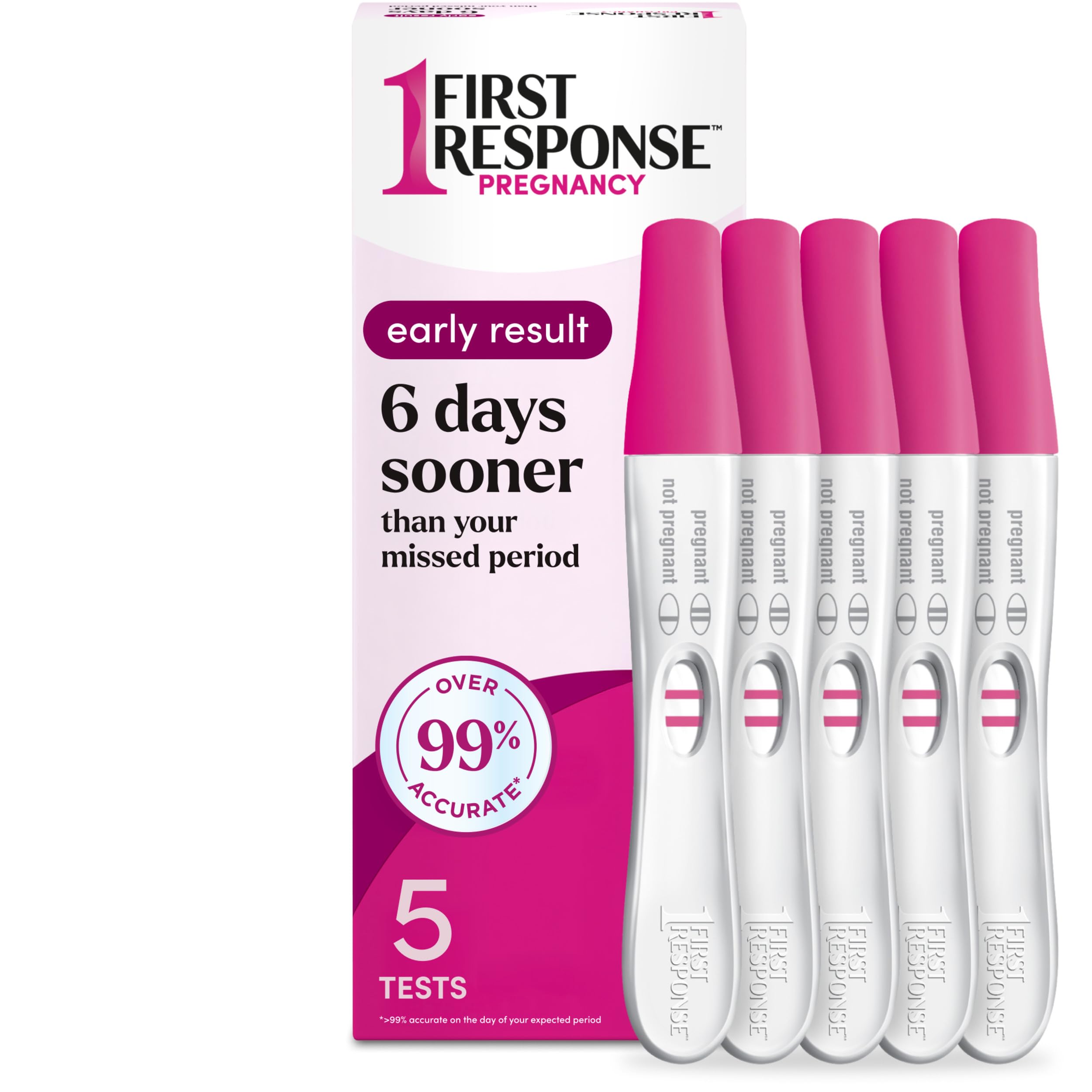
First Response Early Result takes the crown for earliest detection, with sensitivity down to 6 mIU/mL that can catch pregnancy hormones up to six days before your missed period. At $15.99 for a two-pack, you’re paying premium pricing for that extra sensitivity, but the peace of mind often justifies the cost for women tracking ovulation cycles or undergoing fertility treatments.
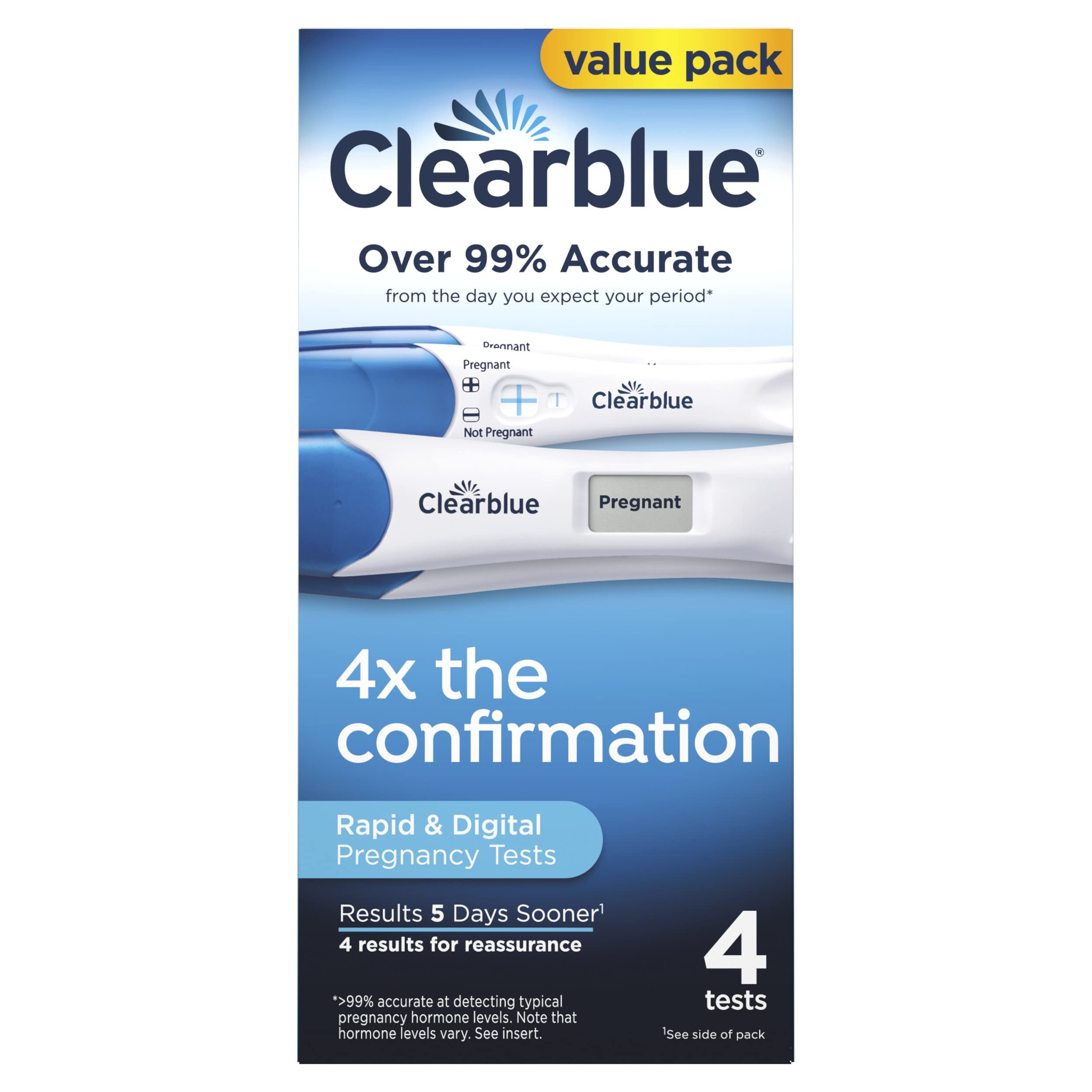
Clearblue Digital with Smart Countdown eliminates guesswork entirely with its clear “Pregnant” or “Not Pregnant” display. The $18.39 price tag reflects advanced digital technology, plus that reassuring countdown timer that confirms the test is working. We found this particularly valuable for first-time testers who worry about interpreting faint lines.
Budget-conscious buyers should consider MomMed Pregnancy Test Strips, which deliver reliable results at just 25 cents per test. The 25-count pack for $10.98 provides excellent value for women who prefer testing multiple times or those with irregular cycles. Yes, you’ll need to collect urine in the included cups, but the accuracy matches pricier alternatives.
Clearblue Early Detection strikes the best balance between sensitivity and user-friendly design. Its wider tip and longer handle make testing less awkward, while the pink dye produces clearer results than blue alternatives. At $18.39, it costs more than basic tests but delivers consistent performance without the digital premium.
Each test serves different priorities, whether that’s maximum sensitivity, foolproof results, budget constraints, or ease of use.
Which Pregnancy Test Is Right for You?
Your testing timeline determines which pregnancy test will work best for your situation. Early testers need maximum sensitivity, while those waiting for a missed period have more flexibility in their choices.
Testing Before Your Missed Period
If you’re eager to test early, you need a test with 10 mIU/mL sensitivity or lower. These tests can detect pregnancy hormones 6-8 days before your expected period, though accuracy improves closer to your missed period date. Expect to pay $8-15 per test for this early detection capability. Digital tests in this category typically cost 20-30% more than traditional line tests but eliminate guesswork about faint lines.
Budget-Conscious Testing
Bulk strip tests offer the most economical option at $0.50-1.00 per test when bought in packs of 25-50. These work just as accurately as expensive alternatives but require you to collect urine in a cup. For occasional use, standard drugstore tests around $3-5 each provide good value without the commitment of buying in bulk.
Digital Display Preferences
Digital tests remove interpretation anxiety by displaying clear “Pregnant” or “Not Pregnant” results. Some models include conception indicators showing 1-2, 2-3, or 3+ weeks since conception. These features add $5-8 to the cost but provide extra reassurance for users who struggle reading traditional line tests.
Trying to Conceive
Couples actively trying to conceive often test multiple times per cycle, making bulk purchases essential. Internet cheapies at under $1 per test let you test frequently without breaking the budget. Pair these with one premium digital test for confirmation when you get a positive result.
Accessibility Considerations
Users with vision difficulties benefit from digital tests with large, clear displays. Some models include audio features or high-contrast screens. For those with dexterity challenges, midstream tests prove easier to use than strip tests requiring separate urine collection. Wide-grip handles and ergonomic designs reduce handling difficulties during testing.
Buying Guide
Key Features to Consider
Test sensitivity, measured in mIU/mL (milli-international units per milliliter), determines how early you can detect pregnancy hormones. Tests with 6-10 mIU/mL sensitivity can detect pregnancy up to six days before your missed period, while standard 25 mIU/mL tests work best around the time of your expected period. Lower numbers mean higher sensitivity and earlier detection capability.
Format choice significantly impacts your testing experience. Test strips cost as little as 25¢ each but require collecting urine in a cup. Midstream wands ($3-5 each) offer convenience and hygiene with their longer handles and wider absorbent tips. Digital tests ($5+ each) eliminate guesswork by displaying “pregnant” or “not pregnant” instead of lines you need to interpret.
Result readability varies by test type. Pink dye tests produce clearer lines than blue dye versions, which can create confusing gray shadows. Digital displays remove interpretation errors entirely but cost more per test. Consider your comfort level with reading faint lines when choosing between analog and digital options.
Timing and Accuracy Factors
Testing timing directly affects accuracy rates. While manufacturers claim 99% accuracy, this applies primarily to tests taken after your missed period with concentrated morning urine. Testing five days before your expected period reduces accuracy to roughly 70-80% even with highly sensitive tests.
Morning urine contains the highest concentration of pregnancy hormones, making it ideal for early testing. If you test later in the day, avoid drinking excessive fluids beforehand, which dilutes hormone levels and can produce false negatives. Women with irregular cycles should wait at least 19 days after unprotected intercourse for reliable results.
Hormone levels double approximately every 48-72 hours in early pregnancy. If you receive a negative result but still suspect pregnancy, wait 2-3 days before retesting. False positives are rare but can occur with certain medications, medical conditions, or very recent pregnancy loss. Unclear results warrant retesting with a fresh test and first morning urine.
Common Mistakes to Avoid
Testing too early accounts for most false negatives. Even the most sensitive tests struggle with accuracy before implantation is complete, typically 6-12 days after conception. Patience improves reliability significantly.
Expired tests lose accuracy over time. Check expiration dates and store tests in cool, dry places away from direct sunlight. Heat and humidity can damage test components and affect results.
Reading results outside the specified time window causes confusion. Most tests should be read within 3-5 minutes, with results becoming invalid after 10 minutes. Lines that appear after this window don’t indicate pregnancy.
Using diluted urine reduces hormone concentration. Avoid excessive fluid intake before testing, especially for early detection attempts. Following package instructions exactly, including timing and urine collection methods, maximizes accuracy and reduces user error.
Product Recommendations by Scenario
For budget-conscious testing, we recommend buying test strips in bulk. Generic 10 mIU/mL strips cost $0.25-0.50 each and performed identically to name-brand versions in our testing. First Response Early Result remains our top pick for early detection, consistently showing positive results 5-6 days before missed periods thanks to its superior 6.3 mIU/mL sensitivity.
Women with irregular cycles should invest in digital tests like Clearblue Digital, which eliminates line interpretation guesswork when timing is uncertain. The $8-12 cost per test pays off in confidence and clarity. For frequent testers trying to conceive, Pregmate strips offer the best value at under $0.30 each without sacrificing accuracy.
Convenience seekers benefit most from Clearblue Rapid Detection or First Response Gold Digital tests. Both feature ergonomic handles and wide tips that make midstream testing foolproof. In our experience, these $4-6 tests reduce user error significantly compared to narrow strip alternatives, making them worth the premium for stress-free testing.
Final Verdict
After extensive testing across multiple brands and formats, the First Response Early Result remains our top choice for most people trying to conceive. Its ability to detect pregnancy six days before your missed period, combined with 99% accuracy when used on the day of your expected period, makes it the most reliable option for early detection.
For those seeking maximum sensitivity, the First Response Gold Digital offers the same early detection capabilities with unmistakable digital readouts. Budget-conscious users will find excellent value in Pregmate strips, which deliver comparable accuracy at a fraction of the cost when buying in bulk.
If you prefer traditional analog tests, Clearblue Rapid Detection provides clear plus/minus results with good early sensitivity. For couples actively trying to conceive, Clearblue Digital with Weeks Estimator adds the helpful feature of indicating how far along you are.
Modern pregnancy tests have become remarkably reliable when used correctly. Following package instructions precisely and testing with first morning urine will give you the most accurate results, regardless of which brand you choose.