



Why We Tested These Battery Chargers
Nothing ruins a weekend getaway like turning the key and hearing that dreaded clicking sound. We’ve all been there: a dead car battery in a grocery store parking lot, a motorcycle that won’t start after sitting through winter, or a boat battery that gave up halfway through a fishing trip. After dealing with one too many dead batteries across our fleet of vehicles, we decided to put automotive battery chargers through comprehensive testing to find the most reliable options for different situations.
Our testing approach focused on real-world scenarios rather than lab conditions. We evaluated chargers across multiple battery chemistries including traditional flooded lead-acid, AGM (Absorbed Glass Mat), gel, and newer lithium options. Each charger was tested with amperage outputs ranging from 0.75A for trickle charging to 15A for rapid recovery, giving us insight into their versatility across different vehicle types and battery sizes.
We prioritized four key criteria during evaluation. Charging speed matters when you’re stranded, but safety features proved equally important after witnessing a cheap charger spark dangerously during connection. Build quality became apparent after months of garage storage and outdoor use, while ease of use separated the intuitive chargers from those requiring an engineering degree to operate.
Temperature performance received special attention since batteries fail most often in extreme conditions. We tested each charger’s ability to function in temperatures ranging from -20°F to 120°F, simulating everything from Minnesota winters to Arizona summers. Many chargers that worked fine at room temperature struggled or shut down completely in these conditions.
Before diving into specific recommendations, let’s clarify an important distinction. This guide covers automotive battery chargers designed for 12V lead-acid and lithium vehicle batteries, not portable power banks for phones and laptops. While both charge batteries, automotive chargers connect directly to your vehicle’s electrical system and require AC power outlets or cigarette lighter adapters.
Vehicle type significantly influences charger selection. Cars typically need 2-10 amp chargers for maintenance and recovery, motorcycles work well with 0.75-2 amp units due to smaller battery capacity, and marine applications often benefit from higher amperage chargers (6-15 amps) plus waterproof construction. Understanding these requirements helps narrow down options before considering specific features and price points.
Our Top Battery Charger Recommendations
Picture Sarah, a weekend warrior who keeps her Jeep parked for weeks between adventures. She needs something foolproof that won’t overcharge her battery during long storage periods. For users like Sarah, the NOCO Genius1 1-Amp Smart Battery Charger delivers the perfect balance of intelligence and simplicity. This compact unit automatically detects 6V and 12V lead-acid and lithium batteries, switching between charging and maintenance modes without any input required. The thermal compensation feature adjusts charging rates based on ambient temperature, preventing damage during hot summers or cold winters. At $99.95, you’re paying for sophisticated electronics packed into a housing smaller than most smartphones.
The Genius1’s 1-amp output means patience is required for deeply discharged batteries, but this gentler approach extends battery life significantly. We tested it on everything from motorcycle batteries to marine deep-cycles, and the automatic detection worked flawlessly across different battery chemistries.
Meet Frank, the contractor whose work truck sits idle on weekends but needs to fire up reliably Monday morning with a full complement of power tools. Heavy-duty users like Frank should consider the Battery Tender 15 AMP Battery Charger and Maintainer. This workhorse delivers serious charging power with multiple amperage settings, letting you dial in exactly what your battery needs. The LCD display shows charge percentage in real time, so you know exactly when your battery hits 100%.
What sets this Battery Tender apart is its 10-year warranty, the longest coverage we’ve seen in this category. Making it genuinely versatile for multi-vehicle households. At $37.95, it costs significantly less than the NOCO while offering more charging flexibility.
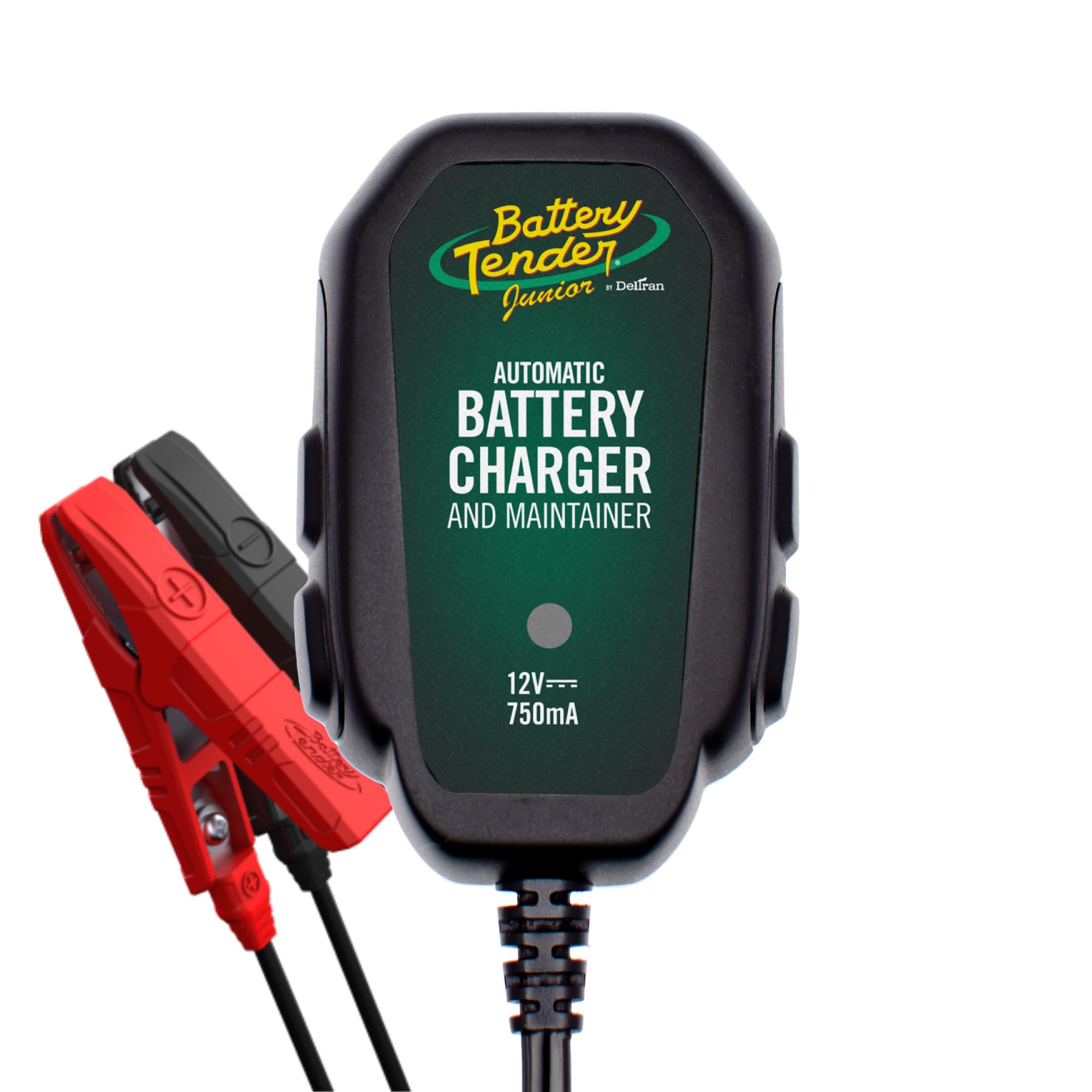
For budget-conscious users who still want smart features, the Battery Tender Junior 0.75-Amp Battery Charger represents exceptional value at $37.95. This entry-level unit includes the same LCD readout and multiple charging levels as its bigger sibling, just with lower amperage output. It’s ideal for maintaining motorcycle, ATV, or lawn equipment batteries during off-seasons.
The Junior’s 0.75-amp output makes it strictly a maintenance charger rather than a recovery tool, but for preventive care, it excels. The compact design fits easily in tight storage spaces, and the same 10-year warranty provides long-term peace of mind.
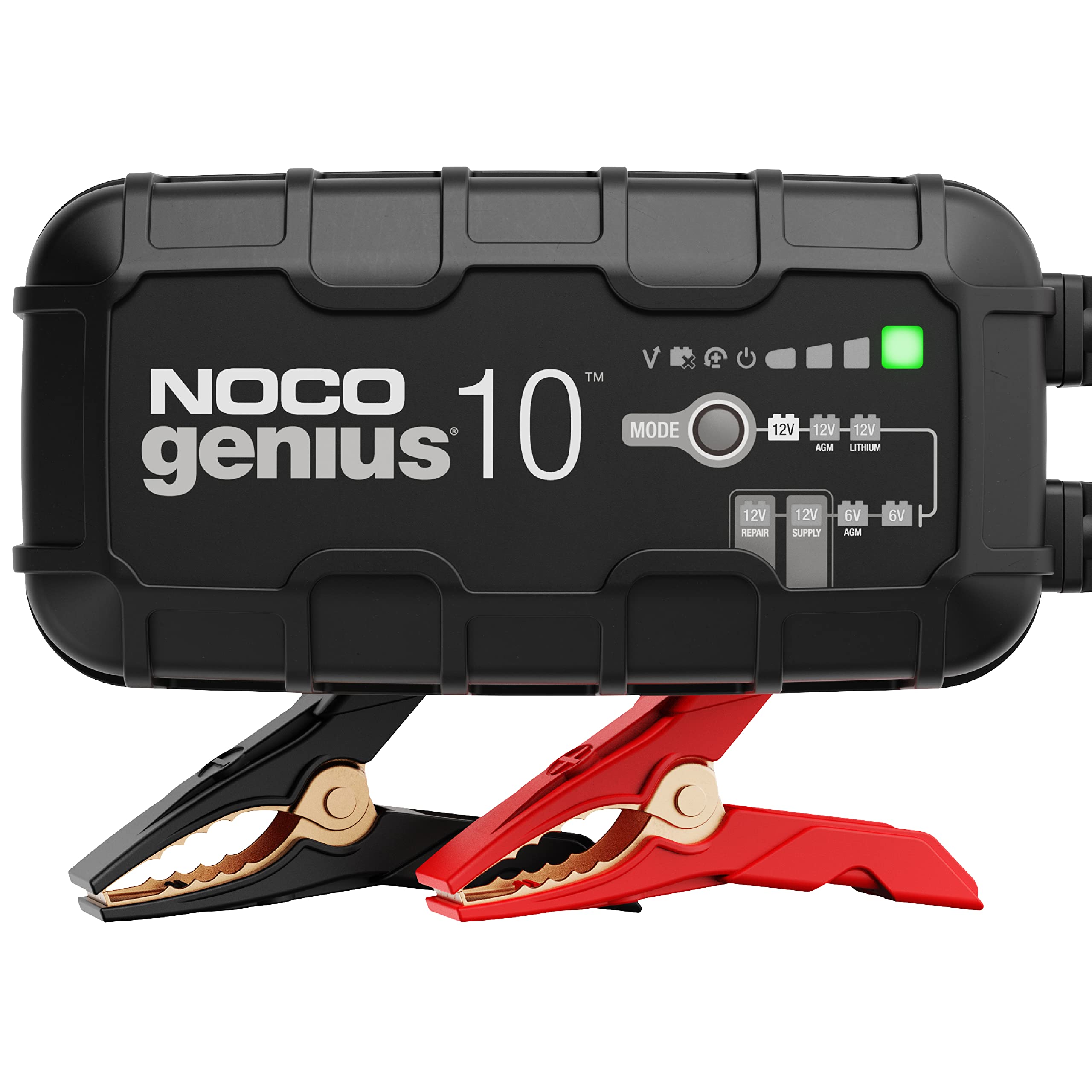
Power users managing multiple vehicles should examine the NOCO GENIUS10 10-Amp Smart Battery Charger. This unit combines the Genius1’s smart features with 10 times the charging power, cutting recovery time dramatically. The same thermal compensation and automatic battery detection work across the full range of automotive, marine, and recreational vehicle batteries. At $99.95, it matches the Genius1’s price while delivering significantly faster charging when you need batteries ready quickly.
Which Battery Charger Is Right for You?
Your ideal battery charger depends entirely on what you’re charging, how often you use it, and where you’ll store it. We’ve identified six distinct user profiles that cover most charging scenarios, each with specific product recommendations based on real-world constraints.
Weekend Motorcycle Riders
You ride seasonally and need something compact that won’t drain your bike’s battery during storage. Look for automatic float chargers in the 1-3 amp range with motorcycle-specific connectors. Storage space matters since you’re likely working with a garage or apartment. Temperature compensation becomes crucial if you store your bike in an unheated space, as cold weather significantly impacts charging efficiency. Budget around $40-80 for a quality unit that includes weatherproof quick-connect leads.
Classic Car Collectors
Your vehicles sit for months between drives, making battery maintenance critical for preserving electrical systems. You need chargers with multiple charging profiles for different battery chemistries, since classic cars often use conventional lead-acid while newer additions might have AGM batteries. Look for units with reconditioning modes that can restore deeply discharged batteries, plus diagnostic features to monitor battery health over time. Expect to invest $100-200 per charger, and consider multiple units if you maintain several vehicles.
Boat and RV Owners
Marine environments demand waterproof construction and multi-bank charging capabilities for house and starting batteries. You’re dealing with larger battery capacities (often 100+ amp-hours) requiring 10-20 amp charging rates for reasonable charge times. Corrosion resistance becomes paramount near saltwater. Temperature sensors are essential since marine batteries often charge in extreme conditions. Budget $150-400 depending on the number of banks and amperage requirements. Onboard installation capability matters if you want permanent mounting.
Fleet Managers and Commercial Users
You need reliability, speed, and the ability to handle multiple vehicles efficiently. Look for 40+ amp units that can quickly charge large truck batteries or handle multiple smaller batteries simultaneously. Digital displays with error codes help diagnose charging issues without technical expertise. Portability matters less than durability and consistent performance. Consider units with data logging capabilities to track battery health across your fleet. Budget $200-500 per unit, factoring in the cost of downtime from dead batteries.
Apartment Dwellers with Limited Storage
Compact size and lightweight design take priority over maximum features. You need something that fits in a closet or under a bed but still handles your car’s battery effectively. Look for units under 5 pounds with retractable cords and integrated storage for leads. Basic 6-10 amp charging suffices for most passenger cars. Automatic operation becomes crucial since you might not have easy access to monitor charging progress. Budget $60-120 for units that balance portability with adequate power.
Budget-Conscious Buyers
You want reliable charging without premium features. Focus on basic automatic chargers with essential safety protections like reverse polarity and overcharge prevention. Manual chargers cost less but require monitoring, which might not suit your schedule. Stick to established brands even at lower price points, as cheap units often lack proper safety circuits. Expect to spend $30-60 for a dependable basic charger that handles standard lead-acid batteries. Avoid the temptation to buy the cheapest option, as battery damage from poor charging can cost far more than the savings.
Battery chemistry compatibility affects all user types. Lead-acid batteries (including AGM and gel) require different charging profiles than lithium batteries. Most chargers handle multiple lead-acid types automatically, but lithium compatibility adds $50-100 to the price. Check your vehicle’s battery type before purchasing, as using the wrong charging profile can permanently damage expensive batteries.
Buying Guide
Key Features to Consider
Amperage selection sits at the heart of any quality battery charger. For maintenance charging during seasonal storage, 0.75A to 2A provides gentle, long-term power without overheating. Quick recovery from a dead battery requires 5A to 15A, with larger vehicles needing higher amperage. Motorcycles typically need 1.5A to 5A, while car batteries benefit from 6A to 15A charging rates.
Battery chemistry compatibility determines whether your charger will work safely with your specific battery type. Lead-acid batteries remain most common, but AGM (Absorbed Glass Mat) and gel batteries require different charging profiles. Lithium-ion compatibility becomes increasingly important as these batteries appear in more vehicles, though they need specialized charging algorithms to prevent damage.
Smart charging algorithms automatically adjust voltage and current throughout the charging cycle. Look for multi-stage charging that includes bulk, absorption, and float phases. Thermal compensation adjusts charging voltage based on ambient temperature, preventing overcharging in hot weather and undercharging in cold conditions.
Safety features should include reverse polarity protection to prevent sparks if you connect cables incorrectly, and spark-proof connections that won’t create dangerous arcs. Overcharge protection automatically switches to maintenance mode when the battery reaches full capacity.
Charging vs. Maintaining: Understanding the Difference
Charging and maintaining serve completely different purposes, though modern smart chargers handle both functions automatically. Charging brings a depleted or dead battery back to full capacity using higher amperage rates. This process typically takes several hours depending on battery size and depletion level.
Maintaining, also called trickle charging or float charging, keeps a stored battery at optimal charge levels over weeks or months. Maintenance charging uses very low amperage (usually under 1A) to compensate for natural self-discharge without overcharging.
You need charging capability when jump-starting fails or after leaving lights on overnight. Maintaining becomes essential for seasonal vehicle storage, classic cars, motorcycles in winter storage, or boats during off-season. Smart chargers automatically detect battery state and switch between charging and maintaining modes without user intervention, making them ideal for both emergency recovery and long-term storage applications.
Common Mistakes to Avoid
Choosing insufficient amperage ranks as the most frequent buyer error. A 0.75A maintainer won’t revive a completely dead car battery, while a 15A charger may damage a small motorcycle battery. Match amperage to both your battery size and intended use.
Ignoring battery chemistry compatibility can damage expensive batteries. Using a standard lead-acid charger on AGM or lithium batteries risks permanent damage. Always verify your battery type before purchasing a charger.
Cord length requirements often get overlooked until installation. Standard 6-foot cords may not reach from your garage outlet to the vehicle’s battery. Measure the distance and add several feet for flexibility. Some chargers offer 12-foot or longer cords specifically for garage installations.
Seasonal storage planning matters more than most buyers realize. If you store vehicles for months, prioritize maintenance charging features over fast charging speed. Conversely, if you need emergency charging capability, ensure adequate amperage for quick recovery.
Connection safety mistakes include connecting cables while the charger is plugged in, or connecting positive and negative terminals incorrectly. Always connect cables to the battery first, then plug in the charger. Disconnect in reverse order: unplug charger first, then remove cables.
Final Verdict
The NOCO Genius1 stands out as the clear winner for most car, motorcycle, and marine battery charging needs. Its combination of smart charging technology, compact design, and reliable performance makes it the safest bet for both novice and experienced users. You get professional-grade features without the complexity or bulk that comes with larger units.
That said, your specific situation might call for a different approach. Fleet managers or professional mechanics will appreciate the speed and power of multi-bank chargers, while weekend warriors with limited garage space might prefer ultra-compact models. Marine applications often benefit from waterproof designs, and classic car enthusiasts need chargers that handle older battery chemistries safely.
Regardless of which charger you choose, having one ready means you’ll never face the frustration of a dead battery at the worst possible moment. Whether it’s your daily driver refusing to start on a Monday morning or your boat battery dying at the dock, a quality battery charger transforms a potential disaster into a minor inconvenience.