


Buying Guide: How to Choose the Best Bath Tray
Size Compatibility and Adjustability
The most critical factor in selecting a bath tray is ensuring it fits your specific tub. Standard bathtubs measure between 28 and 32 inches wide, but variations exist depending on your tub style and manufacturer. We recommend measuring your tub’s interior width at the rim where the tray will rest, as this dimension can differ from the overall tub width by several inches.
Expandable designs offer the most versatility and represent the safest choice for most buyers. Quality adjustable trays typically extend from 22 inches to 43 inches, accommodating everything from compact apartment tubs to oversized soaking models. Look for trays with secure locking mechanisms that prevent sliding or collapsing under weight.
Different tub styles present unique challenges. Clawfoot tubs often have curved or rolled edges that require trays with deeper grooves or rubber grips. Alcove tubs with tile surrounds may need trays that account for protruding tile work. Corner tubs typically require specialized angled designs that standard rectangular trays cannot accommodate.
Fixed-size trays work well if you’ve measured carefully, but they offer no flexibility for future bathroom changes. We’ve found that even slight measurement errors can result in unstable positioning or complete incompatibility.
Material Quality and Water Resistance
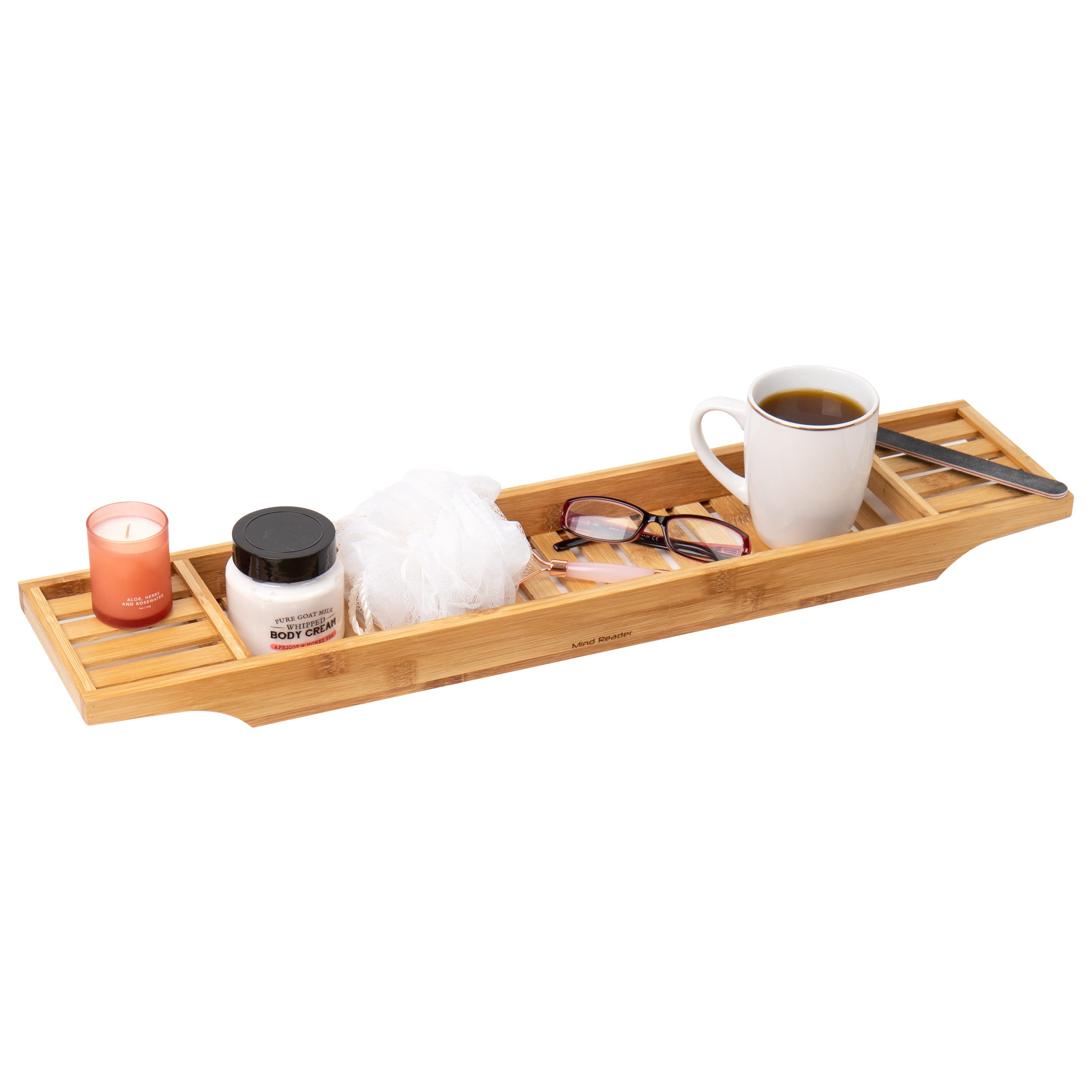
Material choice directly impacts durability, maintenance requirements, and long-term performance in humid bathroom environments. Bamboo dominates the market due to its natural water resistance and attractive grain patterns. High-quality bamboo trays feature multiple protective coats that prevent warping and cracking, though they require periodic re-oiling to maintain water resistance.
Teak offers superior water resistance and longevity compared to bamboo, naturally containing oils that repel moisture. However, teak trays typically cost 40-60% more than comparable bamboo models, with quality options starting around $80 versus $45 for bamboo.
Stainless steel provides the ultimate in water resistance and hygiene, requiring zero maintenance beyond basic cleaning. Steel trays resist bacteria growth and won’t absorb odors or stains. The trade-off comes in aesthetics and comfort, as metal feels cold against skin and lacks the warm, spa-like appearance of wood.
Marble and acrylic represent premium options, with marble offering luxury appeal but requiring careful handling due to weight and fragility. Acrylic combines durability with lightweight construction but can appear cheap if poorly manufactured.
Regardless of material, look for products with proper protective finishes. Unfinished wood will absorb water and deteriorate rapidly in bathroom conditions.
Storage Features and Weight Capacity
Effective storage design balances functionality with stability. Book stands should angle between 45-60 degrees for comfortable reading while preventing books from sliding. Wine glass holders need sufficient depth and secure grip points to prevent tipping, especially when the tray is loaded with other items.
Phone slots must accommodate modern devices with cases, requiring widths of at least 0.4 inches. Shallow compartments work well for small items like jewelry or bath bombs, while deeper sections handle larger bottles and candles.
Weight capacity varies significantly, with basic models supporting 15-20 pounds and heavy-duty designs handling up to 35 pounds. Proper weight distribution prevents tipping, so look for trays with wide bases and low centers of gravity. Avoid overloading one side with heavy items like large bottles or tablets.
Safety features like non-slip grips and rounded edges prevent accidents during use. We’ve found that rubber feet or silicone strips provide the most reliable grip on wet tub surfaces.
Final Verdict
The Monsuri bamboo bath tray strikes the ideal balance between functionality and durability for most bathrooms. Its adjustable width accommodates standard tubs from 29 to 43 inches, while the book holder and wine glass slots handle daily essentials without feeling cluttered. At $79, it costs more than basic plastic alternatives but delivers years of reliable use.
Choose the Umbra Aquala if your budget tops out around $45 and you prefer minimalist design over extensive storage. The Homfa works best for oversized soaking tubs where standard trays fall short. Luxury buyers should consider the Pristine Bamboo for its premium materials and expandable design, though expect to pay $120 for those refinements.
Prioritize stability and size compatibility over appearance when making your final decision. A wobbly tray ruins relaxation faster than any aesthetic shortcoming. Measure your tub’s width carefully and account for any curved edges that might interfere with proper fit. Beautiful design means nothing if your tray slides around or dumps your belongings into the water.