


Buying Guide
Audio Quality and Power Output
Speaker wattage determines whether your karaoke machine will fill the room or leave guests straining to hear. We recommend a minimum of 100 watts for house parties of 15-20 people, while smaller gatherings can get by with 50-75 watts. Larger venues or outdoor events demand 200+ watts to maintain vocal clarity over crowd noise.
Vocal clarity matters more than raw power. Look for machines with dedicated vocal channels and frequency response optimized for human voice ranges (roughly 85Hz to 255Hz for fundamental frequencies). Anti-feedback technology prevents that ear-piercing squeal when microphones get too close to speakers, using automatic gain control or notch filtering to maintain clean sound.
Room acoustics affect performance significantly. Hard surfaces like tile or hardwood amplify sound but create echoes, while carpeted rooms with furniture absorb audio energy. Factor in your typical party space when choosing wattage. A 100-watt system works well in a carpeted living room but may struggle in a large basement with concrete walls.
Essential Features and Connectivity
Microphone quality separates decent karaoke machines from frustrating ones. Wireless microphones offer freedom of movement but require reliable UHF or 2.4GHz transmission to avoid dropouts. Wired microphones provide consistent audio but limit performer mobility. Dual microphone capability enables duets and keeps the party flowing when one person finishes their song.
Connectivity options determine how easily you’ll access music. Bluetooth pairing works with phones and tablets but may introduce slight audio delay. HDMI connections provide the best audio quality for TV integration, while USB ports accept flash drives loaded with karaoke tracks. Wi-Fi enabled machines access streaming services directly, eliminating the need for separate devices.
Built-in screens add convenience but increase cost and weight. Phone or tablet connectivity through dedicated apps often provides better song selection and regular updates. For portable units, expect 6-8 hours of battery life for outdoor parties or venues without power access. LED lighting effects create party atmosphere but drain batteries faster and typically add $50-100 to the price.
Budget Considerations and Value Factors
Entry-level machines ($50-100) work for occasional family use but compromise on speaker power, microphone quality, and build durability. These units typically output 20-50 watts with basic wired microphones and limited connectivity options. They’re adequate for kids’ parties or casual singing but struggle with larger groups.
Mid-range options ($200-400) offer the sweet spot for regular entertainers. You’ll get 75-150 watts of power, wireless microphones, multiple connectivity options, and better construction quality. Premium features like built-in screens, advanced lighting, and app integration justify costs in this range for serious karaoke enthusiasts.
High-end systems ($500+) target semi-professional use with 200+ watts, professional-grade microphones, extensive connectivity, and commercial-quality components. These machines handle frequent use and demanding acoustic environments but may exceed most home party needs.
Consider total ownership costs beyond the initial purchase. Wireless microphone batteries need regular replacement, costing $20-30 annually for frequent users. Song subscription services run $10-15 monthly, while microphone replacements range from $30-80 depending on quality level. Machines with good warranty coverage protect against early failures that plague cheaper units.
Recommended Machines by Use Case
For family entertainment and kids’ parties, compact all-in-one units like the Singing Machine SML385UBK deliver adequate 54-watt output with built-in LED disco lights. The included wired microphone and CD+G capability work well for children who prefer familiar songs over streaming options.
House party hosts benefit from dual-microphone systems with 100+ watts like the ION Audio Party Rocker Max. Its 100-watt output, wireless microphones, and Bluetooth connectivity handle groups of 15-20 people effectively. The built-in battery provides 50 hours of use, supporting long celebrations without power concerns.
Outdoor events demand portable powerhouses such as the Electrohome EAKAR535 with 300-watt peak output and weather-resistant construction. Dual wireless microphones, multiple input options, and 8-hour battery life accommodate larger gatherings in challenging acoustic environments. The integrated wheels and telescoping handle simplify transport between venues.
Budget-conscious buyers should prioritize speaker power over fancy features. A basic 75-watt system with reliable wireless microphones outperforms a feature-loaded 40-watt unit for actual singing performance. Focus spending on audio quality first, then add connectivity and lighting features as budget allows.
Final Verdict
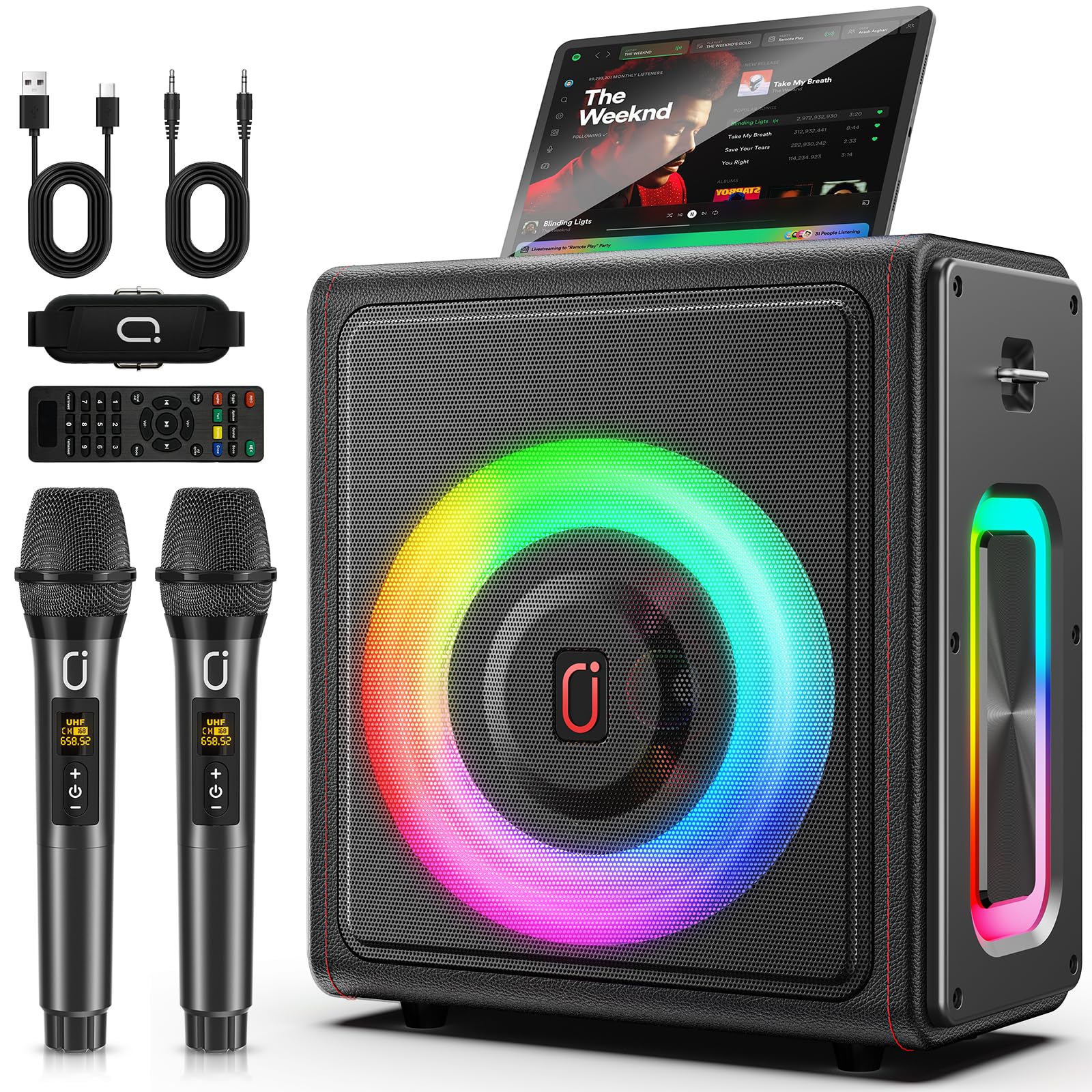
After extensive testing across multiple price points and feature sets, the Ikarao Shell S1 emerges as our top choice for most users. Its combination of wireless microphones, built-in speaker quality, and comprehensive connectivity options delivers professional-grade performance without the complexity. The unit’s dual microphone capability and echo controls make it ideal for duets and group performances.
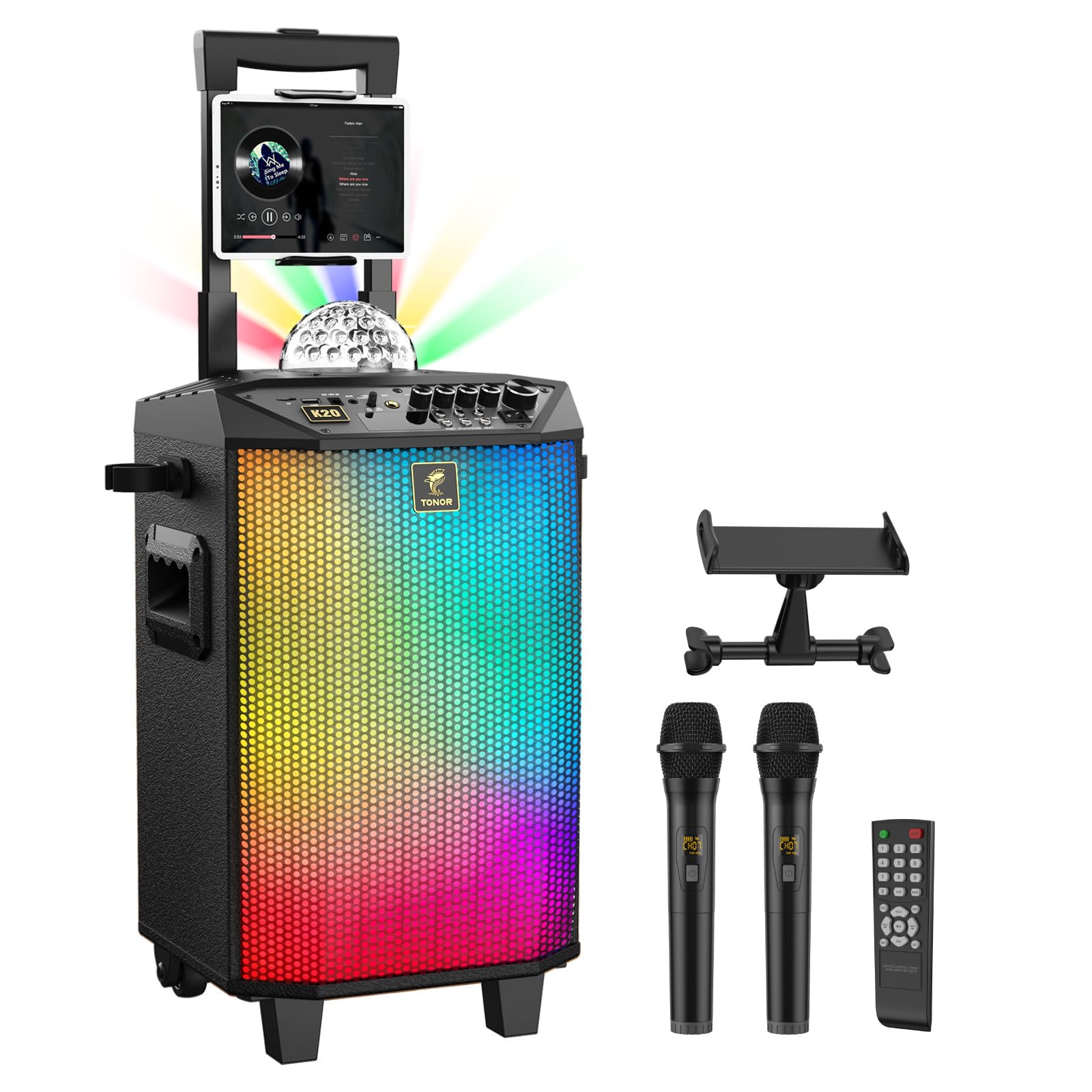
For users who prioritize visual impact, the Tonor K20 offers the most impressive lighting system we’ve tested. Its synchronized LED effects create an authentic club atmosphere, though you’ll sacrifice some audio refinement compared to our top pick.
Budget-conscious buyers should focus on models with at least 15-watt speakers and Bluetooth 5.0 connectivity. While basic units under $100 work for casual sing-alongs, they typically lack the vocal clarity needed for serious performances.
Regardless of your budget, prioritize audio quality over flashy features. Clear vocal reproduction and minimal feedback are non-negotiable for an enjoyable karaoke experience. Test microphone sensitivity and speaker output before committing to any system.