




Buying Guide: How to Choose the Right Ski Socks
Choosing the right ski socks involves balancing three critical factors that directly impact your comfort and performance on the mountain. The wrong choice leads to cold feet, painful pressure points, and shortened ski days. We’ve tested dozens of options across different materials, cushioning levels, and fits to identify what matters when you’re spending hours in ski boots.
Material Composition: Why Merino Wool Dominates
The best ski socks contain 55-70% Merino wool, a percentage range that maximizes warmth and moisture management while maintaining durability. Pure wool socks might sound appealing, but they lack the stretch and longevity needed for ski boots. Merino wool naturally regulates temperature, wicks moisture away from skin, and resists odor buildup during multi-day ski trips.
Quality blends incorporate 20-30% nylon for abrasion resistance in high-wear areas like heels and toes. The remaining 5-15% typically consists of elastane or spandex, providing the stretch necessary for a secure fit without constriction. Synthetic materials like polyester can supplement Merino wool but shouldn’t dominate the blend. Socks with less than 50% Merino wool often fail to regulate temperature effectively, leaving feet either too hot or too cold.
When evaluating wool quality, look for specifications that list “Merino wool” rather than generic “wool.” Cheaper alternatives use coarser wool varieties that feel scratchy and lose insulating properties faster. Premium Merino wool comes from specific sheep breeds and undergoes processing that removes the lanolin responsible for itchiness.
Cushioning and Thickness: Finding Your Perfect Fit
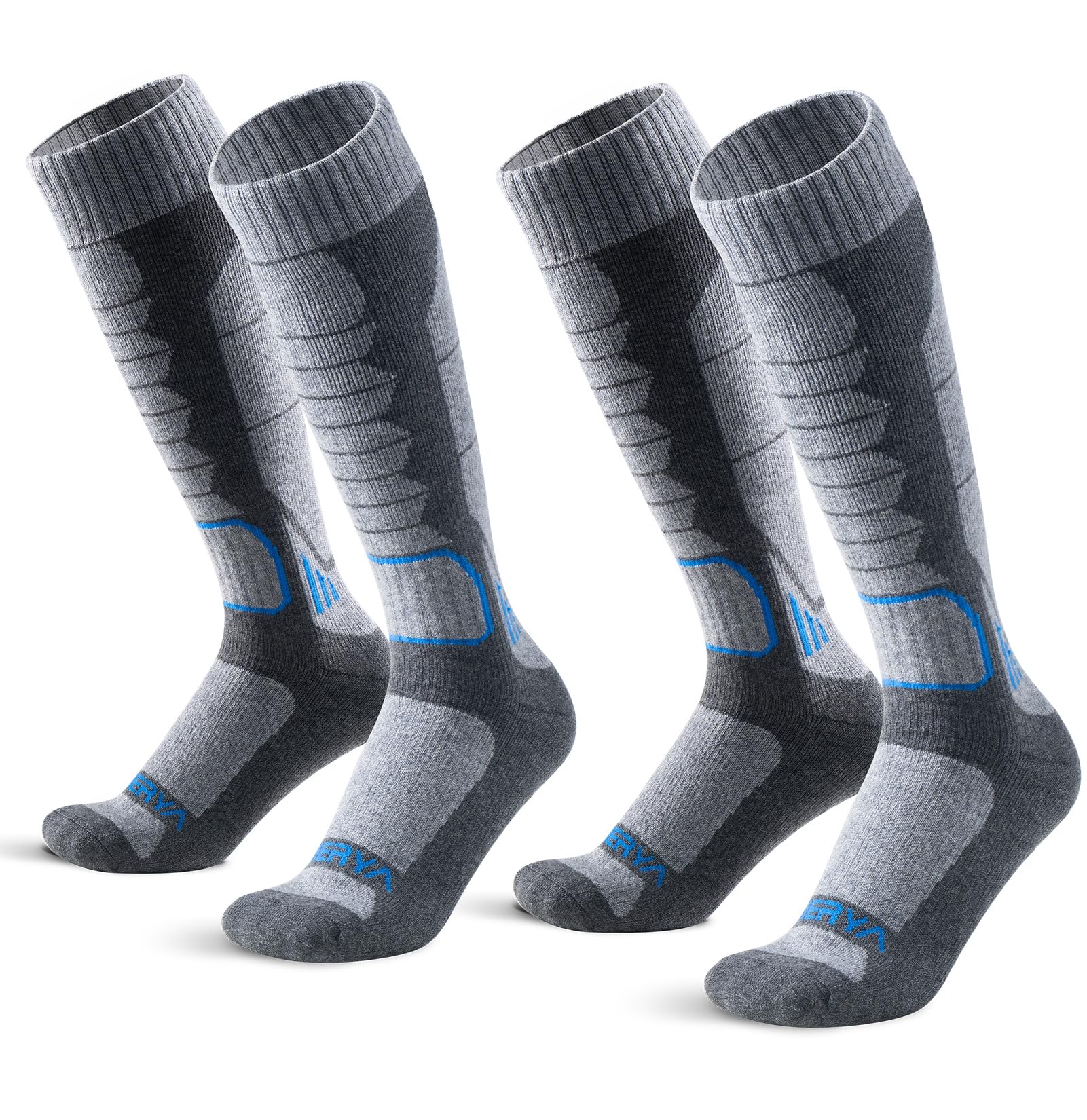
Cushioning placement matters more than overall thickness when selecting ski socks. Targeted cushioning focuses padding on high-impact areas like the heel, forefoot, and shin, while leaving the rest of the sock thinner to prevent boot fit issues. Full cushioning throughout the sock creates bulk that can make properly fitted boots feel tight and reduce control precision.
Your boot fit determines optimal cushioning level. Boots fitted with thin socks require light to medium cushioning to maintain proper heel hold and forward lean angles. Adding thick socks to precisely fitted boots pushes your foot forward, reducing control and creating pressure points. Conversely, boots with extra room benefit from medium cushioning that fills space without compromising circulation.
Thickness doesn’t equal warmth in ski socks. A thin, high-quality Merino wool sock often provides better temperature regulation than a thick synthetic alternative. Excessive thickness can reduce warmth by compressing insulation and restricting blood flow. Most performance-oriented skiers prefer light to medium cushioning that maintains boot responsiveness while providing comfort during long days.
Fit and Sizing: Avoiding Common Pitfalls
Proper ski sock fit differs significantly from regular sock sizing. The sock should feel snug without creating pressure points, with no bunching or sliding inside the boot. Length matters critically: over-the-calf styles prevent the sock from slipping down and creating folds that cause hot spots. Crew-length socks work only if they extend well above your boot cuff.
Sizing considerations extend beyond standard shoe size. Wide feet often require sizing up to prevent lateral compression, while narrow feet may need to size down for proper heel hold. High arches benefit from socks with targeted arch support and slightly looser midfoot areas. People with circulation issues should avoid compression features that might restrict blood flow.
Common sizing mistakes include choosing socks too large to accommodate thick cushioning, or too small because they feel supportive in regular shoes. The sock should complement your boot fit, not fight against it. If you’re between sizes, consider your boot fit: tight boots pair better with smaller sock sizes, while roomier boots accommodate larger sizes. Quality ski socks typically cost $30 or less, with premium options reaching $55. Avoid socks under $15, as they rarely provide adequate material quality or construction durability.
Final Verdict
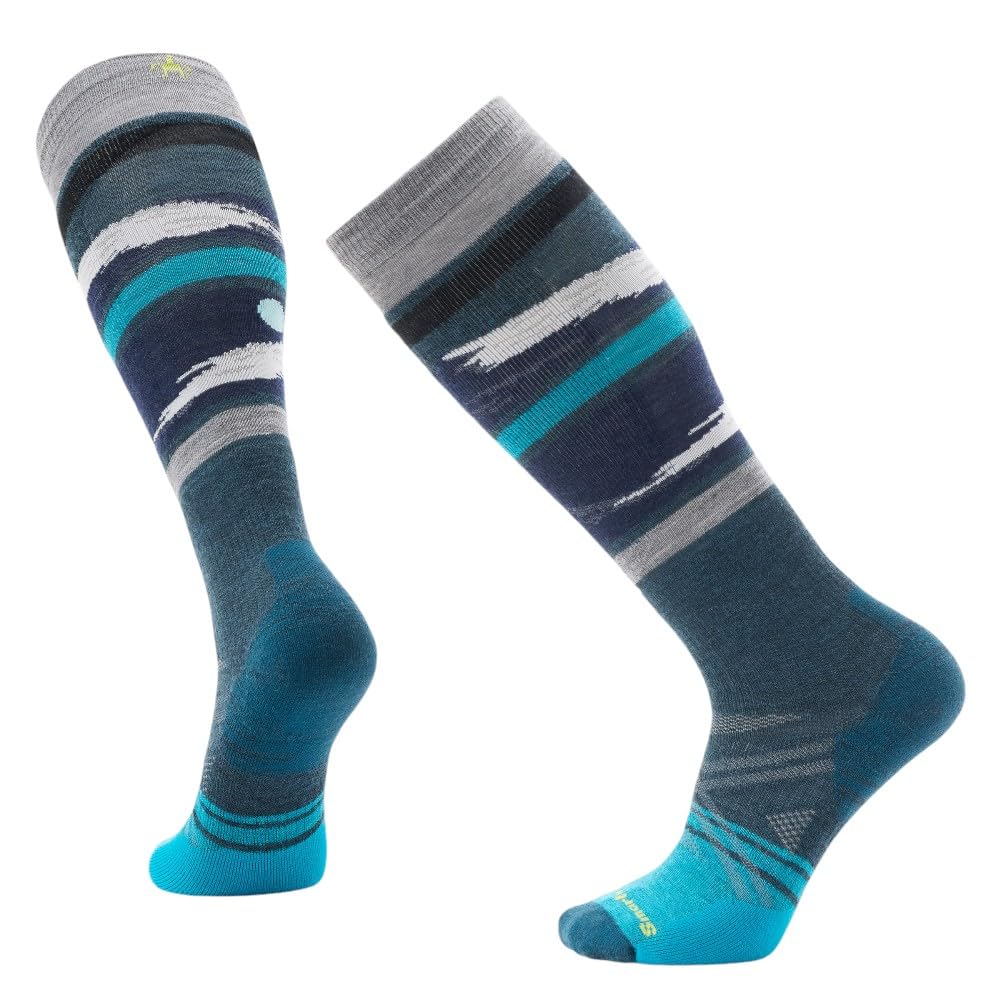
The Smartwool PhD Ski Targeted Cushion remains our top pick for most skiers thanks to its proven merino wool construction, strategic cushioning placement, and reliable moisture management. At $24, it delivers the performance features that matter most: warmth retention, blister prevention, and all-day comfort across varying conditions.
Choose the Darn Tough Vermont Ski socks if you prioritize maximum durability and don’t mind spending $28 for their lifetime warranty. Recreational skiers who want solid performance at a lower price point should consider the REI Co-op Merino Wool options at $18.
Quality ski socks represent one of the smartest investments you can make in your skiing setup. Poor socks lead to cold feet, blisters, and miserable days on the mountain, while the right pair enhances every run. The $6-10 price difference between budget and premium options becomes insignificant when measured against comfort and performance gains over an entire season.